SUSTAINABILITY RESULTS
Our journey towards ever more sustainable horizons
Milan Malpensa and Milan Linate are much more than just two airports. They are a driving force for development, a source of opportunities, and active players in a region that is striving to move towards an increasingly sustainable future.
SUSTAINABILITY VISION
Place, people, future: our horizon
We are opening up our region to the world, turning connections and relationships into shared value.
We are making our airports increasingly innovative, safe, welcoming and sustainable.
It is a daily, forward-looking commitment through which we contribute to the development of communities by supporting the economy, tourism and supply chains.
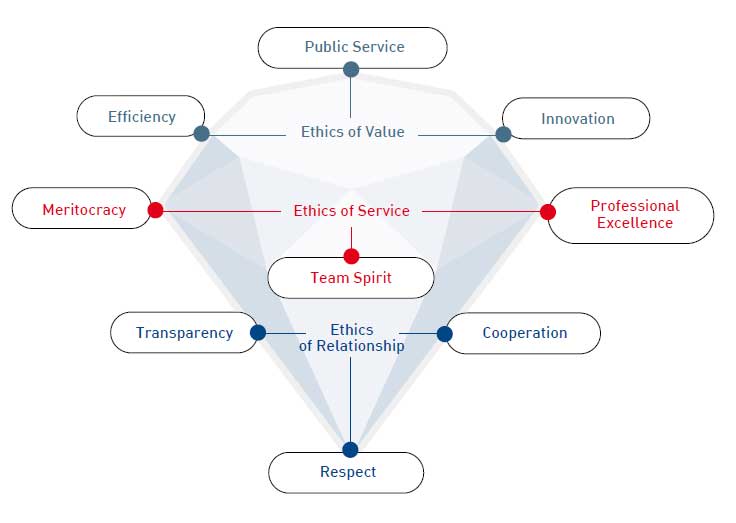
SEA recognises that its value is rooted in public service, innovation and efficiency, which are fundamental elements of its role as the operator of strategic transport infrastructure for the benefit of people, communities and businesses.
The Company pursues a management approach centred on service quality and on dialogue and cooperation with all of its stakeholders, who have direct or indirect interests in SEA’s activities. Every decision is made with the goal of creating lasting value and building relationships based on trust, transparency and cooperation.
SEA fosters an organisational culture that rewards merit, professionalism and teamwork, encouraging each person to support continuous improvement. In doing so, the Company turns its mission into concrete and consistent behaviors, giving full effect to the principles of social responsibility, integrity, transparency and lawful conduct that guide its operations.
MODEL FOR SUSTAINABLE VALUE CREATION
Ongoing dialogue, tangible results
We share the same challenges and aspirations as the people living in the areas where we operate.
The choices we make have an impact on the well-being of the community and influence its path to growth.
That is why we maintain constant dialogue with local people and organisations. It enables us to set priorities, adapt when necessary, and act consistently.
We want to create tangible, measurable and lasting value.
Listening leads to action.
Stakeholder listening and engagement activities are carried out regularly by all Company Departments and Functions that interact with stakeholders during their activities. SEA’s stakeholder engagement policies also include the design and implementation of structured listening and engagement activities over time. These activities gather views, reports and suggestions on the Company’s reputational profile, satisfaction with the services provided, health and safety, well-being in the workplace, the quality of stakeholder relationships and the impact they generate on the surrounding environment.
The stakeholder engagement process includes various engagement methods.
Employees: SEA’s strategy for understanding the interests and perspectives of its employees includes targeted surveys, in addition to the annual employee climate survey, through which structured feedback is collected and consolidated into a summary indicator known as the People Engagement Index. With regard to occupational health and safety, SEA engages its employees through meetings, workshops, and interviews carried out during internal audits and monitoring activities, also involving supplier personnel working within the airport premises.
Local Communities: SEA conducts interviews with community representatives to gather their views on SEA’s distinguishing features and priority areas of intervention with regard to environmental and social sustainability. SEA collaborates with citizens, local institutions, airlines, regional environmental agencies and sector authorities to reduce and contain nuisance noise generated by its airport. Engagement and dialogue take place both through the activities of the Airport Committee.
Passengers: Relationships with passengers are based on a continuous listening system that gathers opinions, evaluations and feedback through various tools. The results of these activities are consolidated into a dataset reviewed on a quarterly basis by the Quality Committee, which uses the findings to set service improvement targets. Regular meetings are also held within the Airport Service Quality and Regularity Committee, alongside the direct involvement of associations representing the rights of people with disabilities when assessing airport services and spaces.
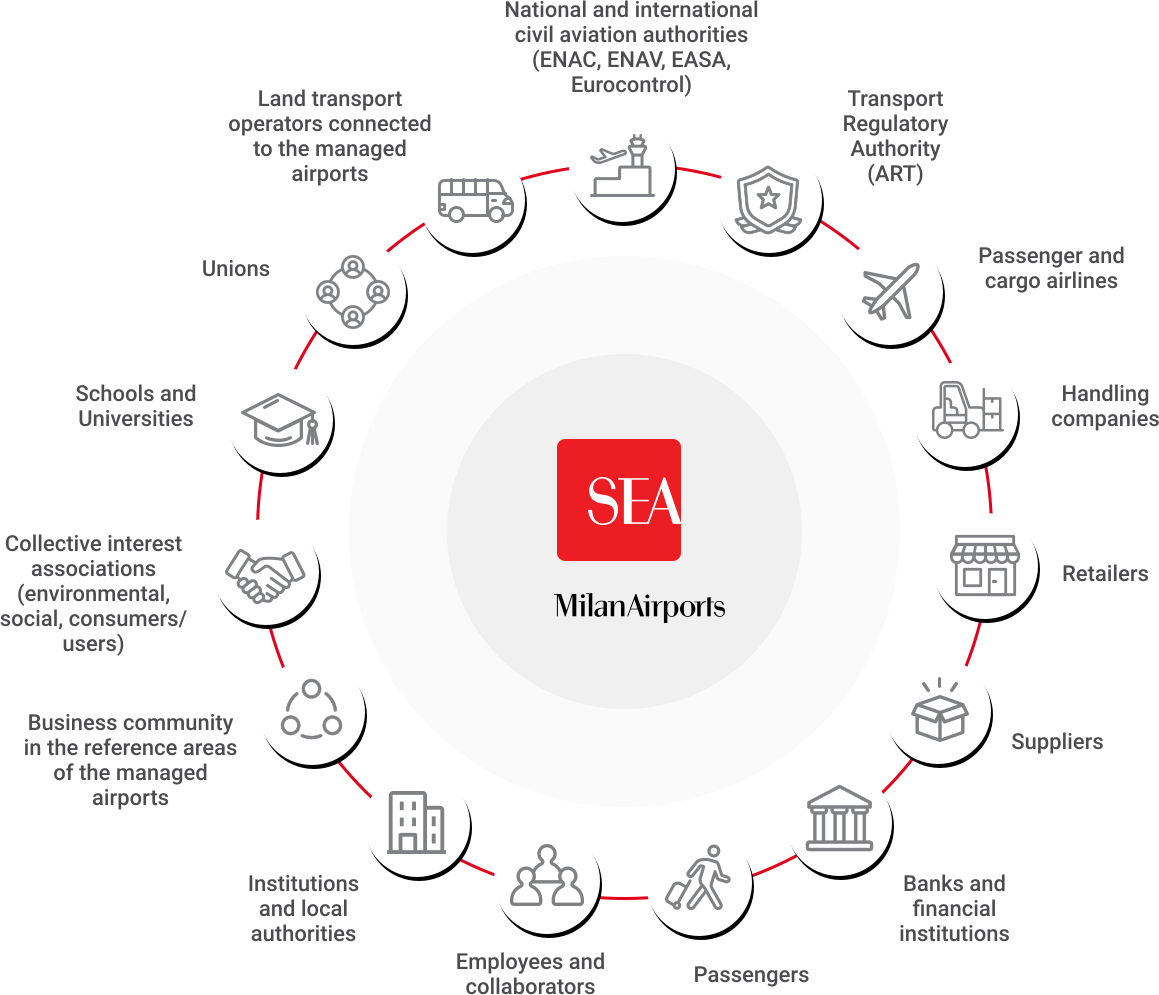
SEA’s main stakeholders are:
PEOPLE
Every direction, an opportunity
We are a team of more than 2,600 people.
We work in a dynamic environment, because we believe in movement and openness, and in the opportunity to develop and express skills, talents and ideas.
We share projects and goals, because we are convinced that each person’s energy is a resource that multiplies value.
Commitment to Health and Safety
Discover our welfare initiatives
Every encounter brings a new opportunity
We build connections and bring differences into dialogue as an opportunity to create value.
Day after day, we make our company increasingly inclusive, addressing the challenges of our sector with commitment and determination.
Training is a strategic priority for the Group and represents a direct investment in the quality of working life. Through SEAAcademy, the GoodHabitz e-learning platform and continuous training programmes developed in partnership with external partners, SEA enhances skills, strengthens professional autonomy and supports the overall growth of its employees.
The objectives of the training programmes are clearly communicated to all participating employees and are based on careful analysis of company and individual needs. Opportunities for internal development are analysed to assess the need for training in soft skills, such as effective communication, problem-solving, leadership and collaboration.
SEAAcademy is gradually expanding its range of courses to include programmes dedicated to artificial intelligence. These programmes are designed to develop advanced digital skills, promote the informed and responsible use of emerging technologies, and support the digital transformation of business processes.
GoodHabitz platform, which provides self-learning content to promote personal accountability, continuous training and long-term professional development.
Mandatory training activities also continued in the Corporate Governance area, covering Privacy, Cybersecurity, the 231 Organisational Model and Anticorruption, ensuring full regulatory compliance and strengthening the Company’s culture of responsibility and security. These pathways involved the entire company population.
Overall, more than 77,000 hours of training were delivered through the initiatives.
SEA boasts a comprehensive and consolidated welfare system, with various initiatives related to health, well-being, parenting, work-life balance, and supplementary pension schemes. This set of initiatives includes disease prevention, psychological consultancy, economic and work support, flexitime, and various other welfare initiatives designed to improve the quality of life of employees.
In 2025, initiatives focused mainly on preventive health and access to medical services, in addition to the implementation of measures to support parenting, mobility and work-life balance.
In the area of healthcare, we have expanded our programmes alongside the Health Insurance Fund to cover areas such as prevention, telemedicine, psychological support and smoking cessation. 41% of employees have taken part in prevention initiatives, whilst the use of digital services is on the rise.
We have continued to support parents through the “Fly, Child!” programme, which includes information resources, dedicated content and the “SEAlife” welfare credit. 50% of female employees returning from maternity leave took part in the return-to-work support programmes.
In the area of transport, we have encouraged the use of public transport by subsidising season tickets by up to 50% (100% for those who give up their parking space at Linate), and over 300 people have taken up the offer.
We have also strengthened our work-life balance measures, including remote working, flexible hours, part-time work, and time off for medical appointments, to promote well-being and career continuity. In 2025, employees took 41,996 days of remote working and 897 hours of time off for specialist medical appointments.
We constantly monitor the effectiveness of our initiatives using usage data and anonymous surveys, with a view to improving the quality and accessibility of our services over time.
SEA considers gender equality to be not only a fundamental right, but also a strategic driver of economic growth and sustainable development.
SEA reached a significant milestone in its sustainability and social responsibility journey by obtaining Gender Equality certification in accordance with UNI PdR 125.
This achievement represents the recognition of a structured and measurable commitment to promoting a fair, inclusive and respectful working environment, in which individuals can express their potential without gender-based barriers or disparities.
In line with our Gender Equality Policy, we strengthened our Diversity & Inclusion initiatives in 2025 by taking action in a number of key areas to bring about tangible change.
To promote gender equality, we have developed initiatives to reduce bias in recruitment processes, strengthen inclusive leadership and prevent discriminatory behaviour. Thanks to our partnerships with specialist organisations, we have launched empowerment initiatives and awareness-raising campaigns, such as the 'Red Benches' project.
SEA has set a target to reach 40% women employees by 2030. Committing to achieving this target is essential to promoting equal opportunities, contributing to reducing the pay gap, creating an inclusive and respectful work environment, and a fair corporate culture.
Thanks to SEA’s commitment to gender balance, the percentage of women in the workforce has increased in recent years. Specifically, in 2025, this share increased by 1.1 percentage points compared to 2024, rising from 35.1% to 36.2%.
The female-male pay gap, also known as the gender pay gap, was 7.77% in 2025 (8.25% in 2024). The indicator is calculated as the average gross hourly wage based on actual hours worked by Group employees
To promote accessibility and inclusion for people with disabilities, we have been running the “SEA con TE” (SEA with YOU) project. This combines awareness-raising activities with feedback mechanisms, such as surveys on disability and caregiving. These surveys help to inform the development of our company policies.
To promote inclusion in relation to sexual orientation and gender identity, we have organised training and awareness-raising initiatives. We have also strengthened our partnership with "Parks Liberi e Uguali" and engaged our workforce in assessment and benchmarking tools, such as the PARKS Index.
Through the adoption of the Occupational Health and Safety Management System (ISO 45001), SEA has strengthened its organisational model, which promotes safe, inclusive and fair working conditions.
The identification and evaluation of the effectiveness of occupational health and safety actions
are monitored through safety indicators. In 2025, five less injuries were reported compared to 2024, resulting in a reduction in the recordable injury rate from 9.37 to 8.41.
All injuries are analysed, in line with the objectives of the Health and Safety Policy. This analysis enables the identification of the most opportune interventions, which may cover infrastructure, maintenance, organisation, awareness-raising, training or other measures depending on the findings of the analysis
Internal audit activities are carried out by qualified personnel to assess the effectiveness of the OHSMS and compliance with internal procedures and regulations. All business areas are subject to internal audits, including those related to workforce management and occupational health and safety. This continuous improvement tool monitors performance, identifies inefficiencies or risks and proposes corrective actions.
In 2025, 18 internal audits on OHS were conducted

ENVIRONMENT
Towards More Environmentally Sustainable Airport Infrastructure
We have made, and certified, a clear commitment: achieving zero-emission for SEA's operations by 2030. Every day across our airports, the use of renewable energy continues to grow, electric mobility is expanding, and sustainable fuels are becoming more widespread, delivering benefits for both the climate and local air quality.
Over 90% of our waste is sent for recovery, while we continue to work on increasing the share of recycled materials. We engage continuously with authorities, local institutions, customers, and surrounding communities to reduce our noise impact.
More Efficient Resource Use, Growing Recycling
Both SEA airports obtained ACA Programme Level 4+ Transition, issued for a plan to reduce Scope 1 and Scope 2 emissions that will lead the airports to have emission levels 96% lower than those of 2010 by 2030, in line with the Paris agreement +1.5° C.
The SEA Group’s Energy Strategy envisages the purchase of “avoidance” carbon credits in a decreasing amount up until 2030 to compensate for residual Scope 1 and Scope 2 emissions. Beyond 2030, having reached Net Zero, it is planned to continue offsetting the non-eliminable “locked” emissions with “removal” type carbon credits and maintain Net Zero in the years to come, with a horizon of 2050.
In 2025, Scope 1 and Scope 2 emissions totaled 65,036 tCO2 eq, down from 66,263 tCO2 eq in 2024. This result was achieved in part through the use of certified green electricity, which accounted for approximately 35% of total electricity consumption in 2025.
To offset 2025 emissions, 67,000 avoidance-type carbon credits were purchased in 2026 from Gold Standard and Verra registries, generated by landfill gas and improved cookstove projects.
The purchase of these credits enables SEA to maintain its carbon neutral status while progressing towards becoming Net Zero by 2030.
Decarbonisation measures
| Energy efficiency | Implementation of energy efficiency projects for plant systems operating within buildings |
|---|---|
| Electrification | Replacement of fleet with low-emission vehicles (electric and hybrid) Development of infrastructure to supply ground power and preconditioned air to stationary aircraft |
| Use of renewable energy | Development of FV Park at Linate and Malpensa airports Use of green electricity and thermal energy certified by the purchase of GOs |
| Switch to alternative fuels | Infrastructure planning for the procurement of HVO Support for the development of the Italian roadmap for a sustainable energy transition |
More Efficient Resource Use, Growing Recycling
The development of airport infrastructure entails the use of input materials. On the output side, passengers and commercial activities generate waste, which the SEA Group is responsible for collecting and transferring to the companies appointed by municipalities to collect waste.
Efficiency in the Use of Natural Resources
In the realisation of new infrastructures and infrastructure works and maintenance, excavation and demolition material are recovered to the maximum extent, with a view to reusing them in finishing the works.
It is significant that, for the realisation of two infrastructure development works at Malpensa Airport, recovered materials were used. SEA’s goal in this initiative was to limit the impacts of extraction, transportation and disposal of materials, to the benefit of affected ecosystems and communities.
Waste Management
Promotion of compostable materials at food outlets
Since 2023, SEA has promoted the use of plastic-free and compostable materials at food and drink outlets at Linate and Malpensa airports. The initiative, which is set to continue in 2026, has the goal of reducing the use of plastic, and particularly single-use plastics.
Increase in Separate Waste Collection
- the latest data on separate waste collection show an improvement at Malpensa from 48.5% in 2024 to 52.3% in 2025, that is, above the target for the reference year;
- Linate exceeded expectations and came in well above the targets set, showing an improvement from 67.4% in 2024 to 70.3% in 2025.
SEA’s approach to managing acoustic impacts is defined to ensure a balance between air traffic development and the protection of local communities by keeping the noise footprint within established levels and promoting effective mitigation measures.
In 2025, SEA launched and planned the following actions to prevent, mitigate, and address noise impact:
Review of SIDs
SEA has completed the review of the standard instrument departure procedures (SIDs) in the southern sector as early as 2024, following discussions with the relevant local authorities. The results showed an overall positive effect in reducing community exposure to the highest noise levels.
Definition of mitigation action at receivers
Mapping was completed of the receivers affected by Malpensa and Linate airlines, verifying for which it would be necessary to carry out direct mitigation interventions as part of the Airport Noise Containment and Abatement Plan that SEA will develop between 2026 and 2031 for Malpensa.
Route compliance verification system
The Malpensa Airport Noise Monitoring Network Control and Management System was upgraded with a specific module to verify compliance with takeoff routes in order to mitigate noise disturbance on the surrounding community.
Phase-out of the noisiest aircraft
As part of the Malpensa Airport Noise Containment and Abatement Plan, from 2026 onwards, there are plans to adopt operating restrictions for certain categories of particularly noisy aircraft at night, reducing noise exposure. SEA therefore began the preparation of the documentation required by European regulations to introduce noise-related operating restrictions at airports,
Green charges
For the new regulatory period as per the Regulatory Agreement - which runs until 2028 - airport tariffs have been proposed for Linate and Malpensa based on noise emissions and air pollutant levels, also taking into account night or daytime hours. The new tariffs, called Green Charges, comprise four integrated components. First is an element related to the weight of the aircraft, applied uniformly without distinction according to time slot or type of traffic. Added to this is a bonus or penalty depending on the noise level of the aircraft, favouring the quietest aircraft. There is also a nocturnal surcharge, introduced to curb noise impacts during the most sensitive hours of the day. Finally, a tariff component linked to NOx emissions is applied, providing incentives for lower-impact technologies and operating practices. As a whole, the Green Charges direct fleet renewal toward more sustainable aircraft, consistent with the Group’s Environmental Policy
PASSENGERS
A constantly evolving travel experience
Passenger satisfaction and the continuous improvement of the passenger experience at Milan’s airports are
essential strategic pillars for SEA. As such, the Group operates a true customer listening system through various channels. The Head of the Quality Function ensures that engagement is carried out and results are shared, enabling them to be integrated into corporate strategy, with particular attention to short- and medium-term investment plans.
SEA has adopted a passenger listening system and ensures that engagement results are shared in order to integrate them into the corporate strategy, with particular focus on short- and medium-term investment plans. SEA has implemented an ISO 9001 Quality Management System certified by an independent body that governs all business processes impacting the quality of airport services.
Find out how we’re making airports increasingly welcoming and accessible
Measures regarding toilet availability, cleanliness, and functionality
In 2025, the process to renovate the toilet blocks at Malpensa and Linate continued. SEA has carried out extraordinary maintenance work, upgraded numerous toilets, and optimised the cleaning oversight, including by experimenting with technological tools.
KPI: Perception of toilet cleanliness and functionality (percentage of satisfied passengers)
Linate
Baseline 2022: 93.9%
Performance 2025: 95.8%
Malpensa
Baseline 2022: 82.4%
Performance 2025: 90.2%
Perception of passport control waiting time
SEA seeks to reduce waiting times at security checkpoints with the use of EDS-CBs (Explosive Detection Systems for Cabin Baggage) and by refining the technical- organisational management processes for the new automated lines (Smart Security). The newly installed EDS-CB devices can detect explosives inside luggage without liquids and electronics needing to be removed from baggage.
KPI: Perception of passport control waiting time (waiting time in minutes in 90% of recorded cases)
Linate
Baseline 2022: 07’:53”
Performance 2025: 5’:16”
Malpensa
Baseline 2022: 08’:47”
Performance 2025: 7’:43”
Availability of airside seating
SEA has planned work to both gradually increase the number of seats in the airside area and to review and optimise the layout of this seating. The objective is to significantly improve the ratio of available seats to the number of passengers, also taking into account changes in traffic.
KPI: Availability of airside seating (TPHP / number of seats)
Linate
Baseline 2022: 2.2
Performance 2025: 2.5
Malpensa
Baseline 2022: 2.1
Performance 2025: 1.8
Check-in waiting time
To monitor, manage and minimise queuing in checkin areas, SEA is investing in the “Passenger Flow Monitoring” project. This system will enable continuous monitoring of the service level of registration operations and enable real-time detection of critical situations, thereby identifying any disruptions and related mitigation actions (e.g. facilitator intervention, handler involvement, etc.) more quickly
KPI: Check-in waiting time (Waiting time in minutes in 90% of reported cases)
Linate
Baseline 2022: 16’:27”
Performance 2025: 11’:13”
Malpensa
Baseline 2022: 15’:05”
Performance 2025: 12’:30”
Wi-fi service quality
SEA has defined a number of actions to provide a better Wi-Fi service at its airports, both in landside and airside areas. Work includes: accurate and regular surveying of service coverage in the passenger area; the consolidation of a new, more flexible and faster web access to browse for free with no time limit; monitoring of band stability and bandwidth and adjustment of usable capacity consistently with traffic forecasts; upgrading wi-fi infrastructure and increasing areas covered.
KPI: score from 1 to 5
Linate
Baseline 2022: 3.05
Performance 2025: 4.33
Malpensa
Baseline 2022: 3.06
Performance 2025: 3.80
PRMs departing with prenotification: waiting time to receive assistance
SEA has adopted an improvement plan based on the full entry into operation of the new PRM IT module, designed to manage and optimise the services dedicated to these passengers, ensuring that they receive the necessary assistance in an efficient and timely manner. This system enables comprehensive management of processes related to the PRM Assistance service, with a focus on personnel management and passenger service.
KPI: Waiting time to receive assistance from one of the designated airport contact points, in the case of pre-notification for PRMs (Waiting time in minutes in 90% of cases)
Linate
Baseline 2022: 6’:00”
Performance 2025: 8’:15”
Malpensa
Baseline 2022: 20’:36”
Performance 2025: 26’:40”
Accessibility and PRM waiting areas
In 2025, SEA continued on its path to improve the accessibility and quality of spaces dedicated to passengers with reduced mobility (PRM), taking action at both Linate and Malpensa airports.
At Linate, the proposal included in the Quality Plan was confirmed. This provides for a complete renovation of the two lounges (“Sale Amica”) and upgrades to bathroom blocks and sets the goal of increasing the number of dedicated toilets and improving overall comfort in the areas. At Malpensa, the new lounge ("Sala Amica") at Terminal 2 and the redesign of the bathroom blocks were completed, while on the Terminal 1 departure floor, the designated PRM access areas were upgraded.
In 2025, SEA also achieved a new certification for the processes to provide assistance to passengers with reduced mobility. This provides for greater involvement of associations representing the rights of people with disabilities in the field verification of services at the airport, which required the formalisation of a specification containing service requirements.
KPI: Perception of accessibility and usability of terminal infrastructure: parking, call intercoms, dedicated rooms, toilets, etc (% PRMs satisfied)
Linate
Baseline 2022: 94.2%
Performance 2025: 98.1%
Malpensa
Baseline 2022: 86.6%
Performance 2025: 98.1%
LOCAL AREA AND COMMUNITY
A driving force for the whole region
Trough our airports of Milan Malpensa Airport and Milan Linate Airport, we pay close attention to local communities in order to create shared growth opportunities for the surrounding area.
Throughout 2025, the Milan airport system continued to act as a magnet for capital, a source of job opportunities and a catalyst for investment initiatives benefiting the whole of Lombardy and the entire north-west of Italy. The total economic impact on the Lombardy region amounts to €49.8 billion, corresponding to the creation of just over 354,000 jobs.
Find out about the scale of the socio-economic impact generated by our airports
Key drivers of growth
Our airports play a key role in the local and national economy, boosting trade, tourism and employment. The airports’ global connectivity boosts exports, particularly in the fashion and furniture sectors, and attracts millions of tourists, having a positive effect across the whole region.
In 2025, Malpensa handled €60.7 billion worth of freight, accounting for 4.9% of Italy’s foreign trade, and welcomed 8.5 million tourists, generating an economic impact of €9.8 billion. Linate handled 2.9 million passengers, generating an economic contribution of over €1.8 billion.
The overall socio-economic impact of Malpensa
Milan Malpensa Airport hosts 535 business units within its airport area and supported around 23,000 direct jobs, generating production value of €7.2 billion. The airport’s indirect impact created approximately 14,400 jobs and €2.7 billion, while induced impact generated around 10,900 jobs and €3.5 billion. Including catalytic effects, Malpensa activated approximately 294,000 jobs overall and generated more than €42.3 billion in value.
The overall socio-economic impact of Malpensa
Value of production (Euro millions) | Employment | |||
|---|---|---|---|---|
2025 | 2024 | 2025 | 2024 | |
| Direct impact | 7,255 | 6,210 | 23,407 | 21,627 |
| Indirect impact | 2,692 | 2,209 | 14,439 | 13,307 |
| Spin-off impact | 3,571 | 2,914 | 10,985 | 10,072 |
| Catalytic impact | 28,872 | 27,258 | 245,026 | 197,350 |
| of which: Tourism | 9,813 | 6,939 | 173,220 | 122,473 |
| of which: International trade | 18,042 | 19,200 | 61,523 | 64,594 |
| of which: Localisation | 1,017 | 1,119 | 10,283 | 10,283 |
| Total impact | 42,390 | 38,591 | 293,857 | 242,356 |
The overall socio-economic impact of Linate